Types of Massage: Swedish, Deep Tissue, Thai and Which One Suits You
A practical guide to massage types in Muscat: Swedish, deep tissue, Thai, hot stone and pregnancy massage, how they differ, who each suits, how massage differs from cupping, and when to ask your doctor first.
Short answer: The most common massage types in Muscat are Swedish massage for relaxation with gentle pressure, deep tissue massage for long-standing muscle tightness with firmer pressure, and Thai massage, which uses stretching and pressure while you stay clothed on a floor mat. Spas also offer hot stone, aromatherapy, lymphatic and pregnancy massage. If it is your first massage, start with Swedish; if your goal is back or neck tightness, ask about deep tissue or Thai. Cupping (hijama) is not a type of massage and carries its own risks.
Note: This guide is for general information and consultation preparation, not a diagnosis or treatment advice. OmaniHub is a directory for exploring providers; it does not provide treatment or decide whether a medical procedure suits you.
Open the treatment menu of almost any spa or massage centre in Muscat and you will see many names: Swedish, deep tissue, Thai, hot stone, aromatherapy, lymphatic, pregnancy, head and shoulders. Many people book the first name they see and then find the session much firmer or much lighter than they expected. That is because “massage” is not one thing: each type has its own goal, pressure and technique.
This guide explains the massage types you are most likely to find in Oman in plain language: what happens in the session, who each type suits, what medical sources actually say about the benefits, when to postpone a massage or ask your doctor first, and what to ask before you book. If you are looking for a centre nearby, you can compare listed centres on the massage in Muscat page.
Quick links
- What is massage, and why are there so many types?
- Swedish massage: the classic choice for relaxation
- Deep tissue and sports massage
- Thai massage: stretching and pressure, fully clothed
- Other common types in Muscat spas
- Cupping (hijama): why it is not a type of massage
- Quick comparison: which type suits you?
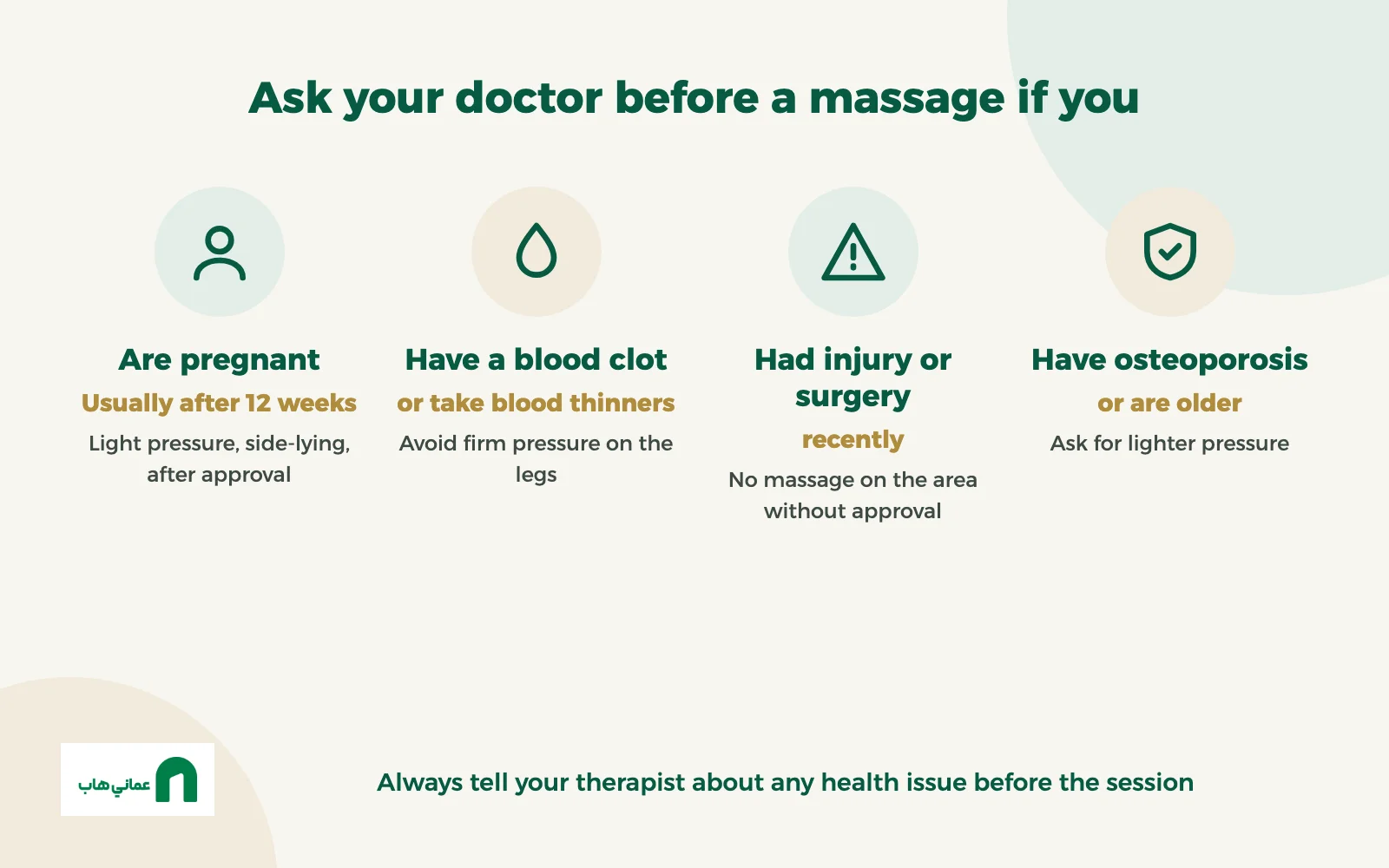
- Safety: when to postpone a massage or ask your doctor first
- How to choose a massage centre in Muscat, and what to ask
What is massage, and why are there so many types?
The US National Center for Complementary and Integrative Health (NCCIH) describes massage therapy as manipulating the soft tissues of the body, meaning muscles, tendons and connective tissue, to help manage a health condition or improve wellbeing. NCCIH notes that massage has been practised in most cultures, Eastern and Western, throughout history, and was one of the earliest tools people used to try to relieve pain.
Massage types differ in three main ways:
- Pressure: from very light touch, as in lymphatic massage, to firm, focused pressure, as in deep tissue work.
- Goal: general relaxation, easing tightness in a specific area, improving flexibility, or comfort during pregnancy.
- Style: on a table with oil and towel draping, or on a floor mat fully clothed with assisted stretches, as in Thai massage.
Cleveland Clinic points out that these types are not exclusive: a good therapist combines techniques based on what they notice in your body and what you tell them. So the name on the menu is a starting point; what matters more is explaining your goal clearly at the start of the session.
Swedish massage: the classic choice for relaxation
Swedish massage, also called classical massage, is the most common form of massage in Western countries, and NCCIH says it is the core of most massage training programmes. In Muscat you will usually see it on spa, hotel and massage centre menus as “Swedish massage”, “relaxation massage” or “classic massage”.
What happens in the session? You lie on a massage table, covered with towels, and only the area being worked on is uncovered. The therapist uses oil or cream with long gliding strokes, light to medium kneading and circular movements. It is usually a full-body session, often starting with the back.
Who is it for? Cleveland Clinic calls Swedish massage the classic go-to for relaxation and says it is a good pick for people new to massage, because it uses a gentle touch and can help calm the nervous system. If you are stressed from work or travel, or want a comfortable first experience, it is usually the easiest choice.
When it may not be enough: if you have an old muscle knot or strong tightness in your neck and shoulders from long hours of sitting, Swedish pressure may feel too light. You can ask for slightly firmer pressure, or consider deep tissue massage.
See centres offering this service on the Swedish massage page and the relaxation massage page.
Deep tissue and sports massage
Muscles tighten with repeated use, even from quiet activities like long hours of sitting, driving and hunching over a laptop or phone. Cleveland Clinic says deep tissue massage gets into the muscles and tendons to release that tightness, and that it suits people with injuries, general muscle tightness and chronic muscle pain.
What happens in the session? The therapist works slowly with firmer, focused pressure, sometimes using fingers, thumbs or forearms on specific areas. You may feel temporary discomfort at tight spots, but sharp pain is not the goal. Tell the therapist straight away if the pressure is too much; a good session is adjusted to your tolerance.
Sports massage: Cleveland Clinic describes it as similar to deep tissue massage but focused on the muscles that take a beating from sport or repetitive activity. You may also see trigger point massage, which applies direct pressure to “knots”, and myofascial release, which stretches the connective tissue under the skin.
An important caution: NCCIH says the risk of harm from massage appears to be low, but there have been rare reports of serious side effects such as a blood clot, nerve injury or bone fracture, and some of these involved vigorous styles such as deep tissue massage or people at higher risk of injury, such as older adults. If you are older, have osteoporosis or take blood thinners, ask your doctor before booking a firm session.
Compare centres offering deep tissue massage.
Thai massage: stretching and pressure, fully clothed
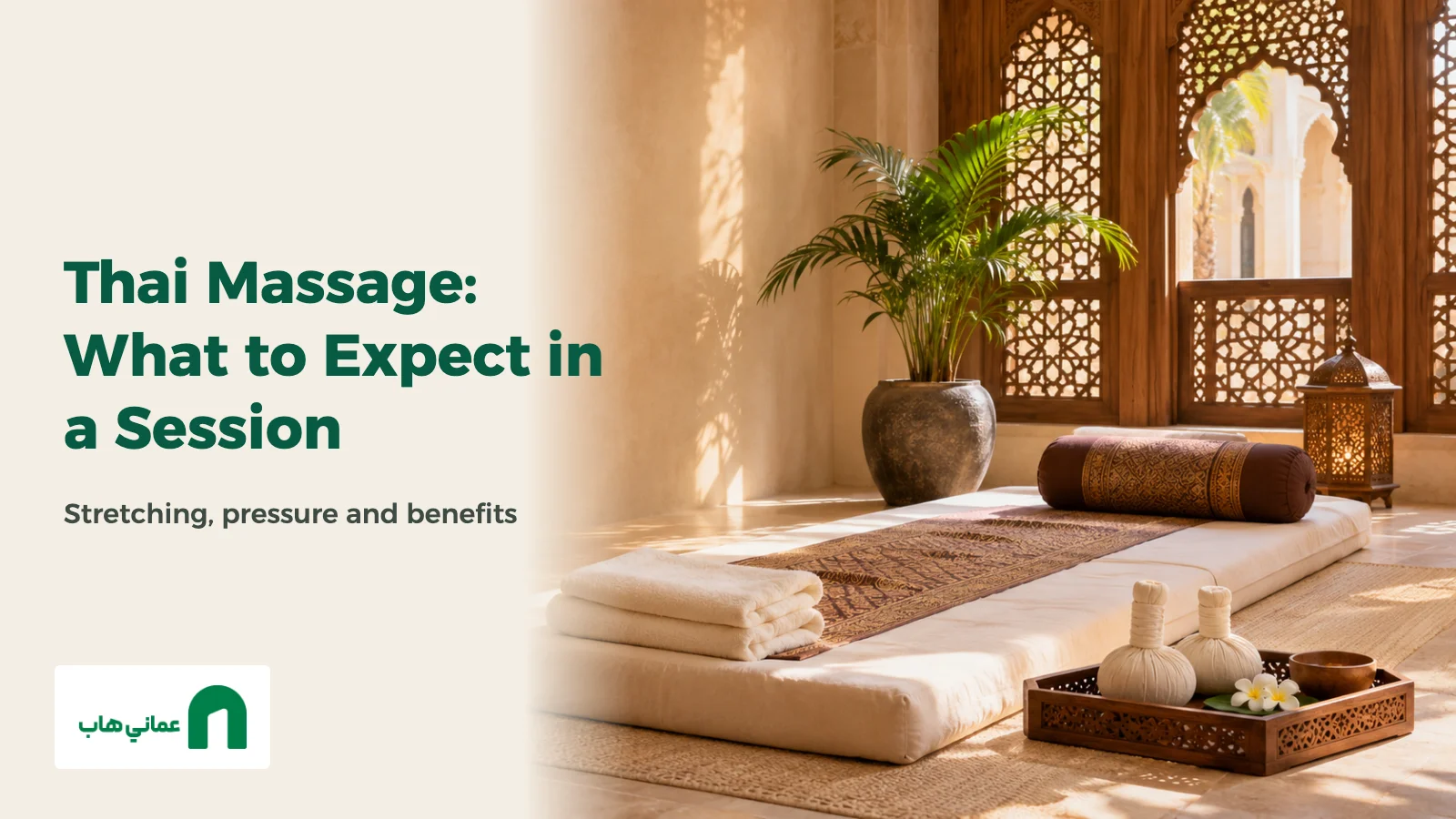
Traditional Thai massage looks and feels different from the types above. It is usually done on a mat on the floor while you wear loose, comfortable clothes, and usually without oil. The therapist uses hands and thumbs, and sometimes knees and feet, to press along lines of the body, then moves your arms, legs and back through stretches that feel like yoga done for you.
Who is it for? People who feel stiff and inflexible, who prefer to stay clothed, or who enjoy stretching more than an oil massage. If you have a recent joint or back injury, are pregnant or have had recent surgery, tell the therapist and your doctor first, because some stretches may not suit you.
What does the research say? A 2015 systematic review in Complementary Therapies in Clinical Practice found six controlled studies of traditional Thai massage for chronic pain. All of them reported lower pain after treatment, ranging from 25% to 80%, with improvements in disability, muscle tension, flexibility and anxiety, and the benefit appeared to last up to 15 weeks. The authors said more research is needed to establish long-term benefits compared with other treatments, so the evidence is still limited.
Compare centres on the Thai massage page.
Other common types in Muscat spas
Besides the three best-known types, spa and massage menus in Muscat often include:
- Hot stone massage: smooth, warm stones are placed on points along the back or used for the massage strokes, and the warmth is meant to relax muscles and deepen relaxation. Ask about the stone temperature, and tell the therapist if your skin is sensitive or you have reduced sensation to heat. Hot stone massage.
- Aromatherapy massage: usually a gentle, Swedish-style massage with diluted essential oils. NCCIH notes that two of the studies on massage for knee pain used aromatherapy. Tell the therapist about any skin allergy or sensitivity to scents.
- Lymphatic massage: very light, slow strokes that Cleveland Clinic says help lymphatic fluid flow more freely. It is used in some medical situations, such as lymphoedema after lymph node removal, where it should be done by a trained therapist with medical guidance.
- Pregnancy massage: light to medium pressure, usually lying on your side with supportive pillows. The safety section below covers when it is suitable. Pregnancy massage.
- Head and shoulder massage and foot massage: shorter sessions focused on one area, useful if you do not want a full-body session or are short on time.
Many centres bundle these with a Moroccan bath or skin care in packages. Read the package description carefully, and ask how long the massage itself lasts, not just the whole visit.
Cupping (hijama): why it is not a type of massage
Some people confuse cupping with massage because some centres offer both. But cupping is a different practice. NCCIH explains that it is used in traditional medicine in several parts of the world, including China and the Middle East, and involves creating suction on the skin with a glass, ceramic, bamboo or plastic cup. In “wet cupping” the skin is pierced and blood flows into the cup; “dry cupping” does not pierce the skin.
What does the evidence say? NCCIH says most research on cupping is of low quality; cupping may help reduce pain, but the evidence is not very strong, and there is not enough good research to draw conclusions about other conditions.
Safety: cupping leaves temporary marks and can cause persistent skin discoloration, scars, burns and infections, and may worsen eczema or psoriasis. NCCIH also warns that using the same equipment on more than one person without sterilisation can spread bloodborne diseases such as hepatitis B and C.
So if you are considering cupping, treat it as a procedure with risks, not a relaxation session: ask about the licence of the facility and practitioner, single-use equipment and sterilisation, and tell your doctor if you take blood thinners, have anaemia or a skin condition.
Quick comparison: which type suits you?
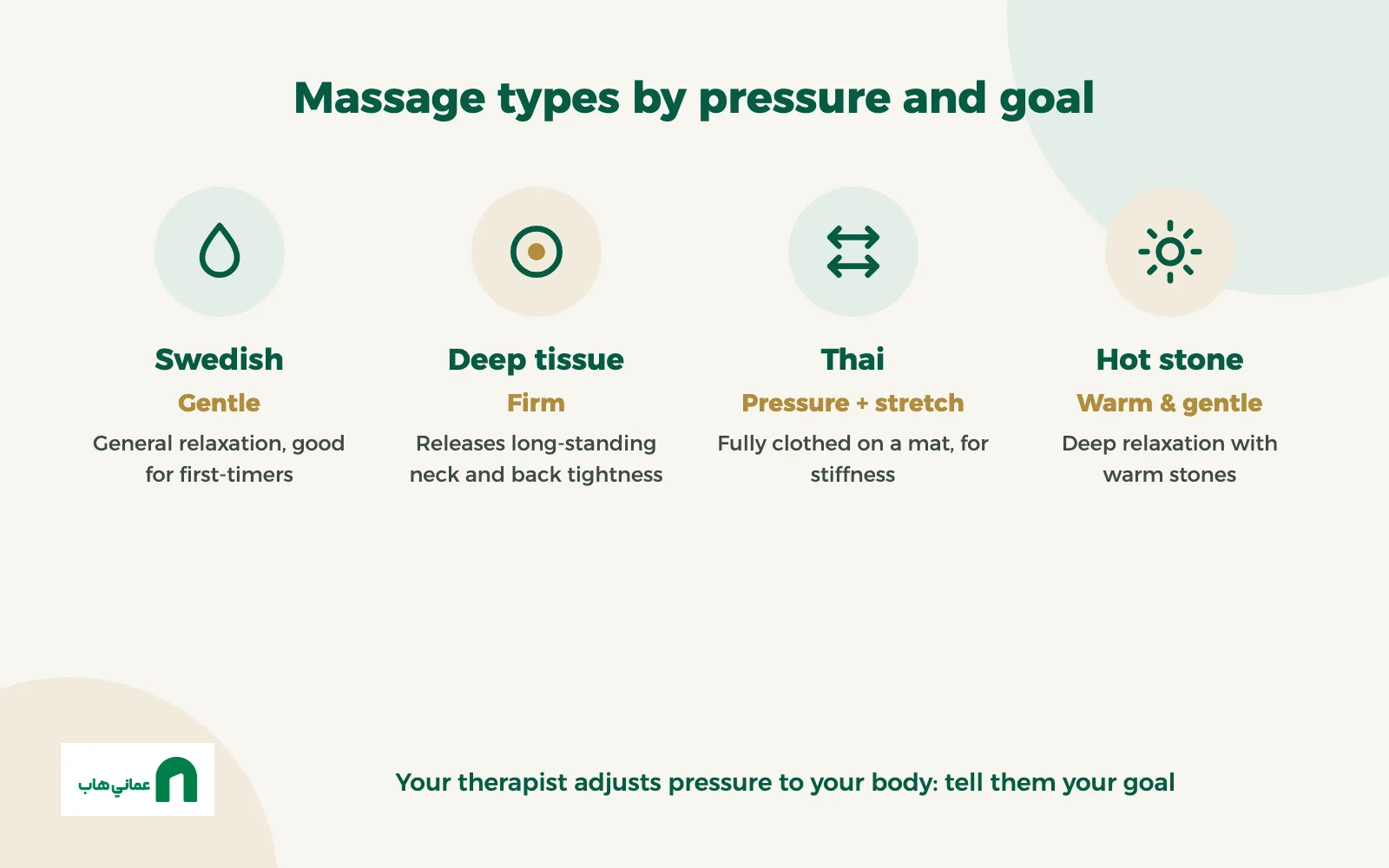
This table summarises the practical differences. It is a guide only; your therapist will adjust the session to your body:
| Type | Pressure | Main goal | Usually suits |
|---|---|---|---|
| Swedish | Gentle to medium | General relaxation and calm | First-timers, stress, general tiredness |
| Deep tissue | Firm and focused | Releasing long-standing muscle tightness | Neck and back tightness, repetitive strain |
| Thai | Medium to firm with stretching | Flexibility and easing stiffness | People who prefer to stay clothed and like stretching |
| Hot stone | Gentle to medium with warmth | Deep relaxation | People who enjoy warmth and want a calm session |
| Lymphatic | Very light | Supporting lymphatic flow | Specific situations with professional guidance |
| Pregnancy | Light to medium | Comfort for back, hips and legs | Pregnant women cleared by their doctor |
This page lists no prices because each centre sets its own prices and session lengths.
Practical tip: if you are unsure, book a Swedish or relaxation massage and tell the therapist about any tight area. They can work on it with a little more pressure within the same session. After one or two visits you will know better what suits you.
Safety: when to postpone a massage or ask your doctor first
Massage is safe for most people when done by a trained therapist, but some situations call for caution or a doctor’s go-ahead before you book. Cleveland Clinic notes that some people with existing medical conditions may not benefit from massage, and advises always telling your therapist about any health issue before your first session.
- Pregnancy: according to Cleveland Clinic, many pregnancy providers recommend waiting until the second trimester (12 weeks and beyond). Pressure should be light and you should lie on your side, because deep pressure could dislodge a blood clot if one is present. Check with your pregnancy provider first; they may not recommend massage with gestational diabetes, high blood pressure or other complications.
- Blood clots or blood thinners: avoid firm pressure on the legs and ask your doctor before any session.
- Osteoporosis and older age: firm pressure carries a rare but real risk, as NCCIH notes.
- Recent injury or surgery: do not book a massage on the affected area without your doctor’s approval. Cleveland Clinic says to get the all-clear before a post-surgical massage.
- Wounds, skin infections or fever: postpone the session until you recover.
- Chronic conditions such as heart disease or cancer: NCCIH says massage can be part of supportive care, with precautions set by your medical team.
About benefits: keep expectations realistic. NCCIH says research on massage for low-back, neck and shoulder pain mostly shows short-term benefits, and much of the evidence is low quality. Massage is a good way to relax and ease tightness, but it does not replace a medical check for ongoing pain, or pain with numbness or weakness.
How to choose a massage centre in Muscat, and what to ask
Before booking, read the centre’s description and visitor reviews, then ask these questions directly by phone or WhatsApp:
- Which massage types do you offer, and how do they differ at your centre? How long is the actual massage in the session?
- Are your therapists trained in the type I want, such as deep tissue or pregnancy massage?
- Can I choose a therapist based on my preference?
- Which oils or creams do you use? Can you use an unscented oil if I have allergies?
- Do you serve women, men or both, and at what times?
- What is your cancellation and rescheduling policy?
On the day: arrive a little early, and tell the therapist about any health issue or area to focus on or avoid. Do not hesitate to ask for lighter or firmer pressure during the session. Drink water afterwards, and avoid hard exercise straight after a deep tissue massage.
You can compare listed centres on the massage in Muscat page, or browse the spa and body care page for Muscat. If you are deciding between a salon, spa or aesthetic clinic, read Salon, spa or aesthetic clinic: how to choose.
Frequently asked questions
What is the best massage for beginners?
Usually Swedish massage, because it uses gentle to medium pressure and focuses on relaxation. Cleveland Clinic describes it as a good pick for people new to massage.
What is the difference between Swedish and deep tissue massage?
Swedish uses lighter pressure for general relaxation, while deep tissue uses firmer, focused pressure on tight muscles and knots.
Does Thai massage hurt?
It should not hurt. It includes pressure and stretches that can be strong, but tell the therapist if the pressure goes beyond what is comfortable.
Can I have a massage during pregnancy?
In many cases yes, but only after your pregnancy provider agrees, usually after the first trimester, with light pressure while lying on your side.
How often can I get a massage?
There is no single rule; it depends on your goal and your body. For relaxation, many people book every few weeks; for long-standing tightness, a therapist may suggest closer sessions for a set period.
Is cupping (hijama) a type of massage?
No. Cupping uses suction cups and may involve piercing the skin, and it has its own risks such as infection and scarring, according to NCCIH.
Does OmaniHub recommend a specific massage centre?
No. OmaniHub is a directory for comparing providers and reading their information; it does not provide the service or rank any centre as the best.
Sources and review
- NCCIH: Massage therapy, what you need to know
- Cleveland Clinic: Types of massage therapy to try
- Cleveland Clinic: Everything you need to know about massage therapy
- Cleveland Clinic: Prenatal massage, benefits and what to avoid
- Cleveland Clinic: Therapeutic (medical) massage and its benefits
- Keeratitanont et al. (2015): The efficacy of traditional Thai massage for chronic pain, a systematic review
- NCCIH: Cupping, evidence and safety
Sources reviewed on 21 November 2026. Information is general and does not predict any individual case.