Your First Spa Visit in Muscat: What to Expect and What to Ask Before Booking
A plain-language guide to a first spa appointment in Muscat: session types, the health form, privacy and pressure, and questions to ask before booking.
Short answer: A first spa visit in Muscat is easier than most people expect. You usually start with a few questions about your health and goals, then lie under a sheet or towel with only the area being worked on uncovered, and you can ask for lighter or firmer pressure or stop the session at any moment. Choose the session type by your goal (relaxation, muscle tension or a bath ritual), and tell the therapist about your health and any medication.
Note: This guide is for general information and consultation preparation, not a diagnosis or treatment advice. OmaniHub is a directory for exploring providers; it does not provide treatment or decide whether a medical procedure suits you.
Many people put off a first spa visit because they do not know what will happen. Do I have to undress? What do I say about pressure? What should I ask before booking? And what is the difference between all the names on the treatment menu? This guide answers those questions in plain language so your first appointment is comfortable and well planned.
We relied on open, reliable sources: the US National Center for Complementary and Integrative Health (NCCIH), the University of Minnesota, the American Massage Therapy Association (AMTA) and the Oman Ministry of Health page on private health establishments. This article lists no prices and recommends no specific centre, because every venue sets its own packages and policies.
One caveat before we start: massage is mostly a relaxation and self-care practice, not a cure for a disease. If you have ongoing pain or a medical condition, your doctor decides what suits you, and the spa complements that advice rather than replacing it.
Quick links
- What does “spa” mean in Muscat?
- Types of sessions: which one first?
- Before you book: what to decide first
- When to postpone or speak to your doctor
- What happens at a first visit, step by step
- During the session: pressure, talking and breathing
- After the session: what to do
- How to choose the right place
- Questions to ask when booking
- Practical tips for a comfortable first visit
What does “spa” mean in Muscat?
The word “spa” covers quite different places, and knowing the difference saves disappointment. According to the University of Minnesota, most people receive massage in a place designed for it, most commonly a commercial setting such as a spa, wellness centre or massage clinic, and it is increasingly offered in hospitals and rehabilitation clinics as well.
- Day spa: a short visit for a single treatment or a package on the same day.
- Hotel and resort spa: usually offers several treatments and extra facilities, and may need advance booking.
- Wellness centres and clinics: sometimes focus on therapeutic massage or body care, and may work under medical supervision.
- Moroccan and Turkish baths: a steam, scrub and wash experience, covered in its own guide on our site.
These differences mean the name alone is not enough. Read the treatment description, and confirm the name, length and contents of the session before you book.
If you are unsure whether you need a spa, a salon or an aesthetic clinic, see Salon, spa or aesthetic clinic: how to choose.
Types of sessions: which one first?
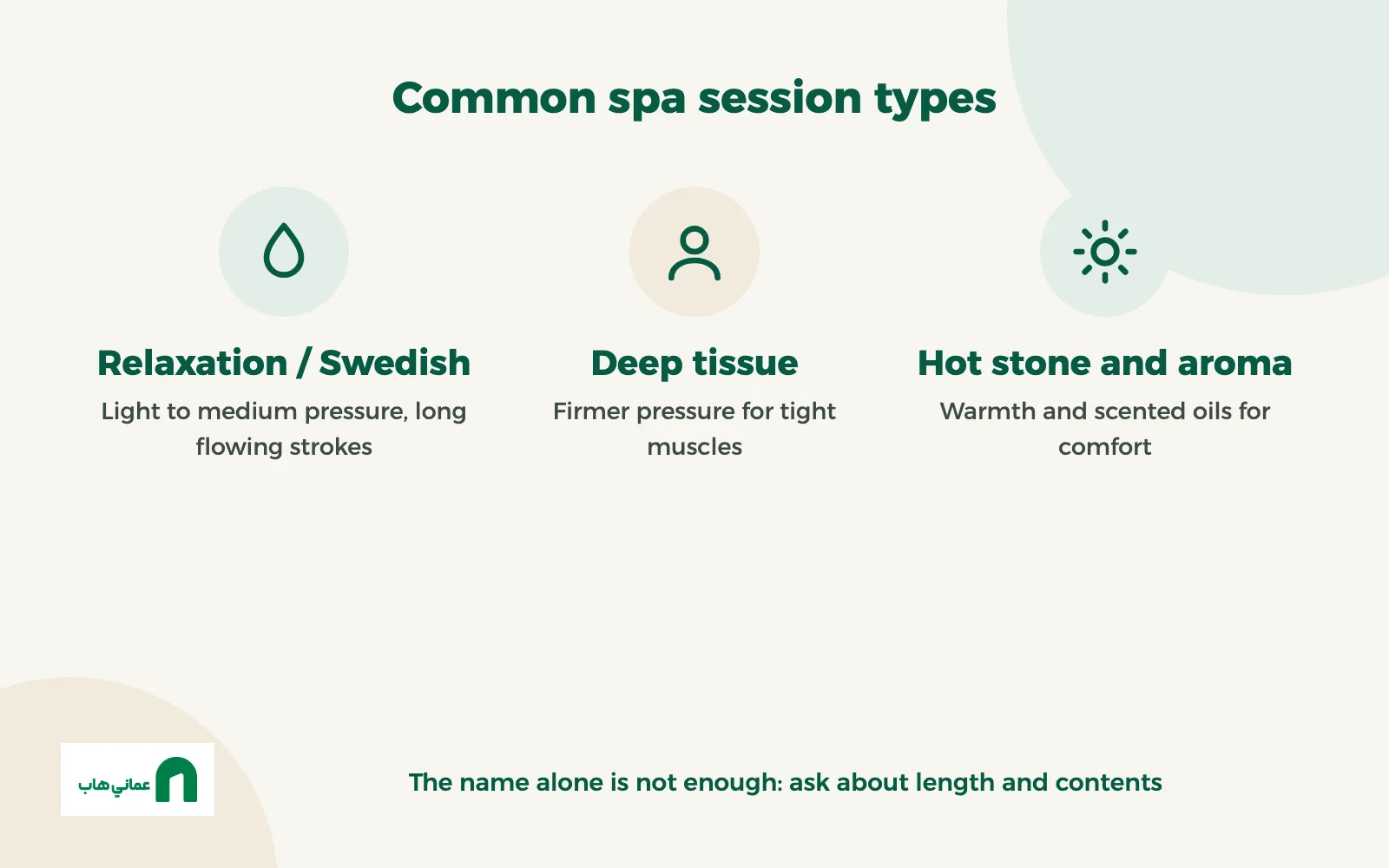
NCCIH explains that “massage therapy” covers many techniques. The most common in Western countries is Swedish or classical massage, which is the core of most massage training. Other styles include sports massage, clinical massage for specific goals such as releasing muscle spasms, and traditions from Eastern cultures such as Shiatsu and Tuina. The table below summarises what you typically see on a spa menu:
| Session type | In short | May suit you if |
|---|---|---|
| Relaxation / Swedish | Light to medium pressure with long flowing strokes | It is your first time and you want a calm experience |
| Deep tissue | Firmer pressure aimed at deeper muscle layers | You have neck or back tension and tolerate stronger pressure |
| Aromatherapy | Massage with scented oils | You like a gentle scented atmosphere and have no oil allergies |
| Hot stone | Warm stones placed on the body or used in the massage | You enjoy warmth and are comfortable with heat |
| Thai | Stretching and pressure on specific points, often in light clothing | You prefer a more active, stretching style |
| Moroccan or Turkish bath | Steam, scrub and wash | You want a body-care ritual more than a massage |
This table is for general understanding only. Names, durations and details differ between venues, and the therapist decides what suits you after hearing your situation.
For more depth, read Types of massage: Swedish, deep tissue, Thai, Thai massage: what to expect and Moroccan bath vs Turkish bath.
Before you book: what to decide first
A first appointment goes best when you know what you want from it. Ask yourself:
- Goal: relaxation and stress relief, tension in the neck and shoulders, or a bath and body-care experience?
- Duration: AMTA says a table massage usually lasts between 30 and 90 minutes, while seated chair massage, often offered in public places and workplaces, lasts about 10 to 30 minutes.
- Personal comfort: Do you prefer a female therapist? Do you need a women-only venue? Ask the venue directly about its policy, as some offer this and some do not.
- Your health: Are you pregnant, or do you have a chronic condition, a skin sensitivity or medication that affects blood or blood pressure?
Book a time when you are not rushed. The University of Minnesota advises arriving on time and relaxed, because someone who arrives stressed and hurried takes longer to unwind.
When to postpone or speak to your doctor
The University of Minnesota says to reschedule if you have a fever or skin irritation (such as sunburn), or if you are trying to stabilise a medication dose, because massage can affect the dose you need. It also notes that massage can enhance or reduce the effect of some drugs, such as blood pressure medication, so tell the therapist about everything you take, including herbal remedies.
NCCIH says the risk of harm from massage appears low, but there have been rare reports of serious effects such as a blood clot, nerve injury or bone fracture. Some of the reported cases involved vigorous types of massage, such as deep tissue, or people at higher risk of injury such as older adults.
- Speak to your doctor first if you have blood clots, osteoporosis, heart or vascular disease, or if you are pregnant (some venues offer sessions designed for pregnancy, and your doctor can say whether one is suitable).
- Do not ignore new, severe or unexplained pain: that belongs in a doctor’s office, not a massage room.
- Ask for lighter pressure over sensitive areas or after a recent injury.
What happens at a first visit, step by step
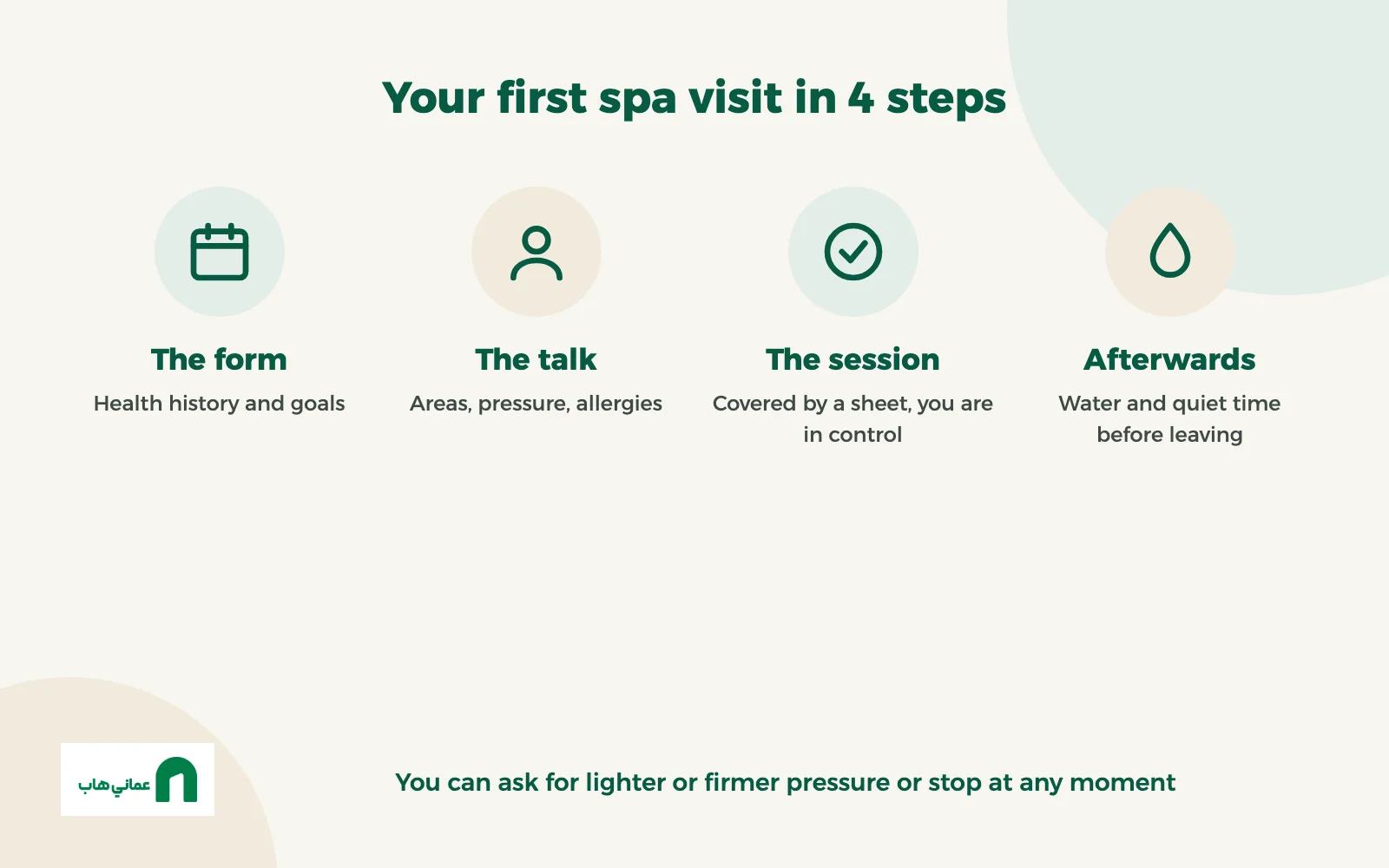
The University of Minnesota and AMTA describe the process in very similar terms. In short:
- 1. Arrival and form: first visits usually begin with a health history. The University of Minnesota says it may ask about medical conditions, areas of concern and your level of pain, and it may be sent to you before the appointment. If not, arrive early to fill it out.
- 2. Talking with the therapist: they review the form and ask about your goals. You can name areas to focus on or avoid and techniques you like or dislike.
- 3. Privacy: the therapist explains what will happen, then leaves the room while you undress. AMTA says to remove only what you are comfortable removing, then lie under the sheet or towel provided.
- 4. The session: only the area being worked on is uncovered, and the rest of the body stays covered. According to the University of Minnesota, a professional therapist will not expose private areas or any area you identify.
- 5. Finishing: the therapist leaves the room so you can dress in private, and you are usually offered a glass of water.
If you are anxious about undressing, say so before the session. The University of Minnesota says the therapist should be able to offer options, and that what you say is confidential.
During the session: pressure, talking and breathing
The most important thing to know is that you control the experience. AMTA says you have the right to consent to the techniques used, including the level of pressure, to ask for adjustments at any time, and to stop the session and report anything you feel is inappropriate. The University of Minnesota puts it simply: you are in charge, so tell the therapist if you are cold, do not want an area touched, or do not like the music.
- Pressure: AMTA says the therapist should check on pressure and comfort throughout the appointment, and if you are uncomfortable at any time you should say so. Do not endure painful pressure out of politeness.
- Talking: it is fine to talk, but the University of Minnesota notes you may get more benefit from a relaxation massage if you let go of everyday worries. If you are nervous and need to talk to feel safe, the therapist will understand.
- Music and scents: you can ask for different music or silence. If you are allergic to oils or lotions, tell the therapist before the session starts, as AMTA advises.
- Breathing: the University of Minnesota advises breathing steadily, not holding your breath when a sensitive area is worked on and not tightening your muscles. If you cannot relax, tell the therapist so they can adjust.
- Emotions: safe touch, music or the smell of oil can bring up unexpected feelings, even tears or laughter. The University of Minnesota says this can happen and that the therapist will ask whether you are comfortable continuing and adapt the session.
After the session: what to do
The University of Minnesota advises staying on the table for a few minutes before getting up, especially if you feel light-headed, then taking your time to get ready. It suggests drinking water afterwards and allowing some quiet time if possible rather than returning straight to work. It also says your perception of motion (driving, stairs, distances) may feel “off” for about 20 minutes, so avoid booking a session immediately before an important meeting.
How you feel afterwards varies: relaxed, energised, or suddenly aware of how tired you are, and you may feel mild soreness after a firmer massage, according to the University of Minnesota. Both it and AMTA say the benefits of massage tend to be cumulative, so you may feel better with repeated sessions.
What does the science say? NCCIH gives a measured picture: only weak evidence that massage helps low-back pain, some short-term benefit for neck and shoulder pain and knee osteoarthritis pain, and inconsistent results for headaches. In other words, massage is a comfortable experience that many people value, but do not expect a guaranteed treatment for chronic pain.
How to choose the right place
There is no single “best spa” for everyone, and this article does not recommend one. These questions help you compare:
- Licensing and therapists: AMTA says you should expect a licensed, registered or certified therapist working within their scope of practice. Ask about the qualifications of whoever will treat you. In Oman, private health establishments are regulated through the Ministry of Health’s Directorate General of Private Health Establishments; if a venue offers medical or therapeutic services, ask about its licence.
- Hygiene: look at how clean the room, towels and tools are, and whether sheets are changed between clients.
- Transparency: are the name, length and contents of each session clearly stated? Is the cancellation and late-arrival policy explained before you book?
- Privacy: a closed room, a sheet or towel, and a therapist who leaves while you change.
- Reviews: read more than one review and look at the details; our guide how to read salon reviews in Muscat can help.
You can browse providers on the spa and body care page for Muscat on OmaniHub, compare services and reviews, and contact the venue directly. Remember that OmaniHub is a directory for discovery; it does not deliver sessions, and each venue sets its own prices and packages.
Questions to ask when booking
- Which sessions do you offer, how long is each, and what exactly does it include?
- Can I choose a female therapist? Is the venue women-only?
- What are the therapist’s qualifications, and have they worked with a situation like mine?
- Is there a health form to complete, and should I arrive early?
- Do you use oils or products that could cause an allergy, and can I see the ingredients?
- What is your cancellation and late policy?
- Are there private rooms and lockers for belongings?
- What should I do if I feel uncomfortable during the session?
Practical tips for a comfortable first visit
- Drink water in the days before and avoid a heavy meal just before the session, as the University of Minnesota suggests.
- Arrive at least ten minutes early to fill in the form and settle.
- Bring comfortable clothes to change into afterwards if you are worried about your clothes or hair.
- Keep your phone in your bag or on silent.
- Say “lighter” or “firmer” without hesitation: it is the most useful information a therapist can get.
- Do not schedule anything important right after your first session.
- Note what you liked and did not like so you can tell the therapist next time.
Frequently asked questions
Do I have to undress completely?
No. AMTA says to remove only what you are comfortable removing, and you stay covered by a sheet or towel with only the area being treated uncovered. You can tell the therapist your preference before you begin.
How long does a session last?
According to AMTA, table massage usually lasts 30 to 90 minutes and seated chair massage 10 to 30 minutes. Durations vary between venues and session types.
Should I talk during the session?
That is your choice. You can talk or stay silent, and if you want different pressure or feel uncomfortable, speak up straight away.
What if I want lighter or firmer pressure?
Say so at any moment. AMTA confirms you have the right to ask for pressure adjustments at any time.
Is massage safe for everyone?
NCCIH says the risk appears low, but there are rare reports of serious complications such as blood clots, nerve injury and fractures, mostly with vigorous types or in people at higher risk. Talk to your doctor if you have a health condition.
Does massage treat back and neck pain?
NCCIH reports weak evidence for low-back pain and short-term benefits for neck and shoulder pain. It is a comfort option, not a replacement for medical care when needed.
Does OmaniHub recommend a specific spa?
No. OmaniHub is a directory for exploring and comparing providers. It does not deliver sessions and does not rank any venue as the best.
Sources and review
- NCCIH (US National Institutes of Health): Massage therapy, what you need to know
- University of Minnesota: What can I expect in a first massage therapy visit?
- AMTA: What to expect at your massage session
- Oman Ministry of Health: Directorate General of Private Health Establishments
Sources reviewed on 24 November 2026. Information is general and does not predict any individual case.