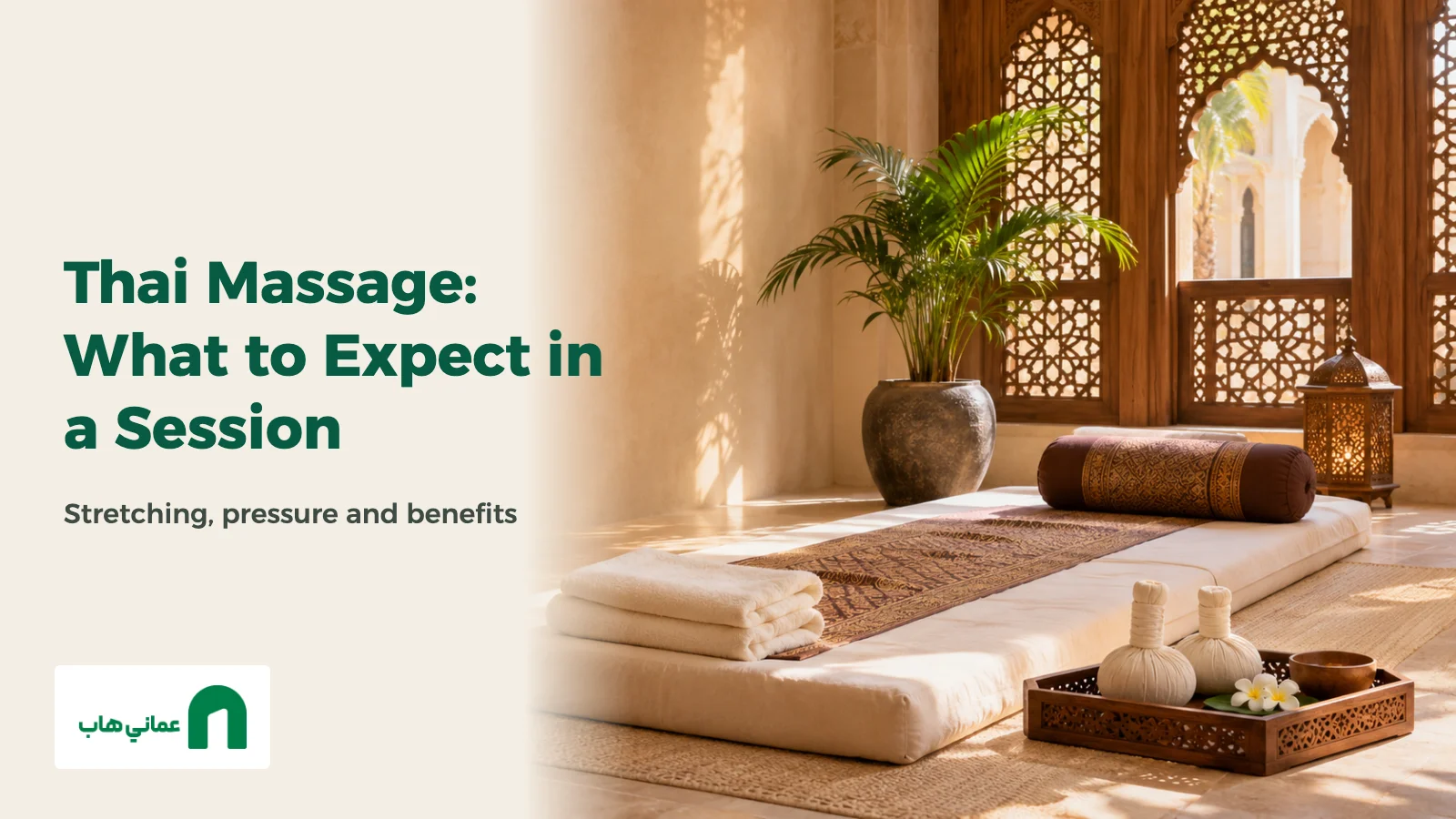
Thai Massage: What It Is and What to Expect in a Session
A guide to Thai massage (Nuad Thai): its origins, what happens in a session step by step, how to prepare, whether it hurts, what research says about benefits, who should avoid it, and how to choose a centre in Muscat.
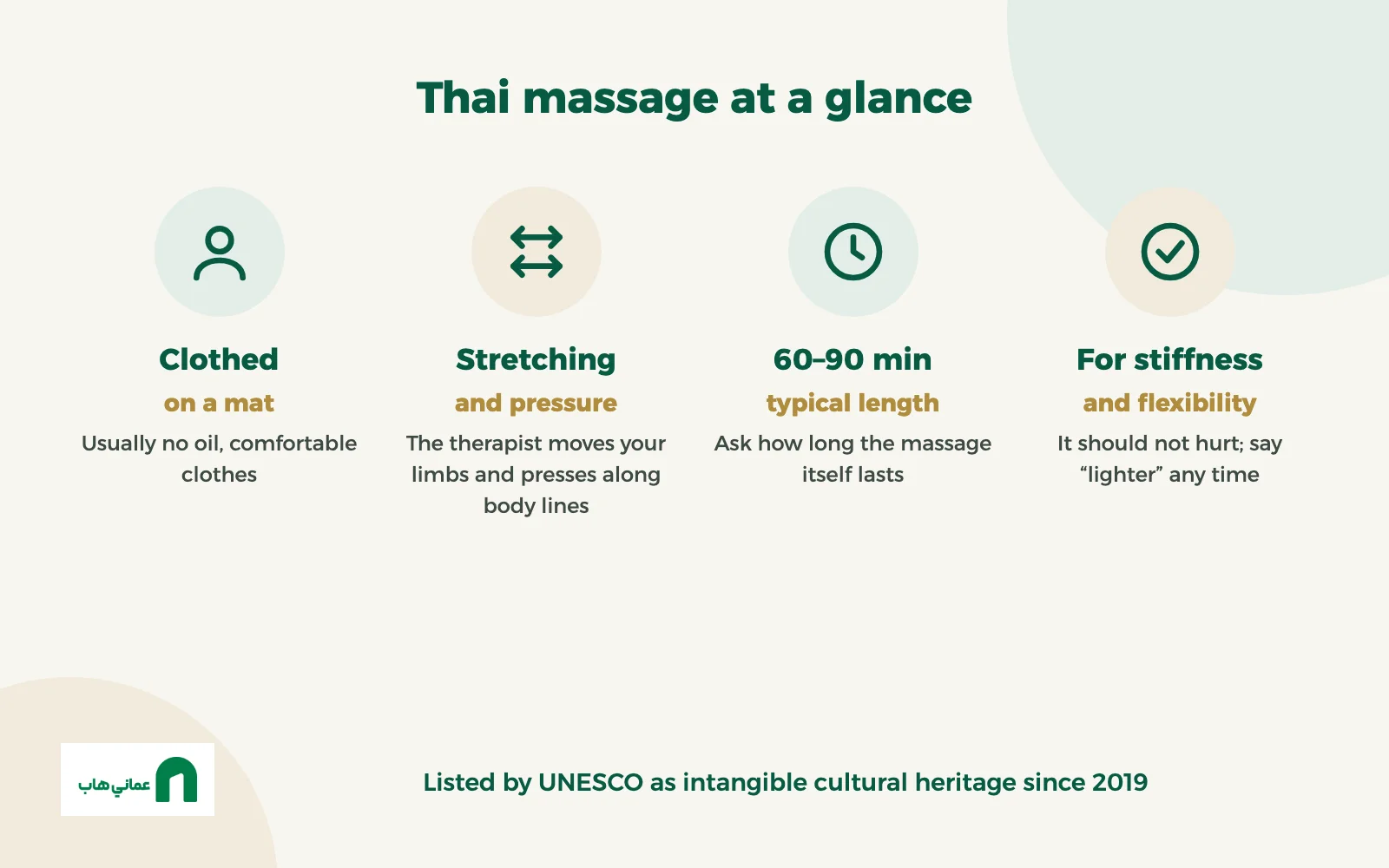
Short answer: Thai massage (Nuad Thai) is a traditional style from Thailand that combines pressure along lines of the body with stretches the therapist moves you through. It is usually done on a floor mat while you wear comfortable clothes, without oil, and typically lasts 60 to 90 minutes. It suits people who feel stiff and enjoy stretching, and it should not hurt; tell the therapist if the pressure is too much. If you are pregnant, have a recent injury or osteoporosis, ask your doctor first.
Note: This guide is for general information and consultation preparation, not a diagnosis or treatment advice. OmaniHub is a directory for exploring providers; it does not provide treatment or decide whether a medical procedure suits you.
Thai massage is one of the most requested massage types in Muscat and appears on the menus of most massage centres and spas. Yet many first-timers are surprised: there is no table and no oil, and the therapist moves your arms and legs and presses with their hands and sometimes their feet and knees. That is not a mistake in the session; it is how this style works.
This guide explains what Thai massage is and where it comes from, what happens in a session step by step, how to prepare, whether it hurts, what research actually says about its benefits, who should avoid it, and how to choose a centre in Muscat. For a comparison of all massage types, also read Types of massage: which one suits you.
Quick links
- What is Thai massage (Nuad Thai)?
- What happens in a Thai massage session, step by step
- Before and after: how to prepare and what to expect
- Does Thai massage hurt?
- What does research say about the benefits?
- Is Thai massage right for you? A quick check
- Thai massage compared with Swedish and deep tissue
- Who should avoid it, and when to ask a doctor first
- How to choose a Thai massage centre in Muscat
What is Thai massage (Nuad Thai)?
Traditional Thai massage, called “Nuad Thai” in Thailand, was inscribed by UNESCO in 2019 on the Representative List of the Intangible Cultural Heritage of Humanity. UNESCO describes it as part of the art, science and culture of traditional Thai healthcare, and as a non-medicinal manual therapy in which the practitioner manipulates the body to help rebalance it.
The traditional idea is based on lines in the body called “sen”, and practitioners believe that blocked energy along them causes tiredness and pain. So the therapist presses along these lines using hands, elbows, knees and feet, sometimes with warm herbal compresses. This is a traditional explanation rather than a modern medical one, but it explains why the session feels so different from Western massage.
According to UNESCO, Nuad Thai is now classified into two main types: Nuad Thai therapy, and Nuad Thai for health promotion. What you find in massage centres and spas in Muscat is usually the second type: a session for relaxation and easing stiffness, not treatment for a medical condition.
What happens in a Thai massage session, step by step
Details vary between centres and therapists, but a typical session goes through these stages:
- Check-in and questions: the centre usually asks about any injury, health issue or area you want to focus on. This is your chance to mention back or neck pain or any past surgery.
- Changing: many centres provide loose cotton clothes, or ask you to wear comfortable sportswear. You do not need to undress as you would for an oil massage.
- Starting with feet and legs: many therapists begin by pressing on the feet and gradually work up the legs.
- Pressure and stretching: the therapist presses with palms and thumbs along lines on the legs, back and arms, then moves your limbs through yoga-like stretches, and may ask you to lie on your back, then your side, then your front.
- Back, shoulders and neck: often in the last part, and the session may include a seated position to work on the shoulders.
- Finishing: usually with light movements for the head or shoulders, then a short rest.
A common session length is 60 to 90 minutes, and some centres offer shorter or longer sessions. Always ask how long the massage itself lasts, not the whole visit.
Before and after: how to prepare and what to expect
- Clothing: ask whether the centre provides clothes; otherwise wear loose sportswear that lets you move.
- Food: avoid a heavy meal right before the session, because some positions press on the stomach.
- Timing: arrive a few minutes early to fill in any form and talk to the therapist without rushing.
- Health information: tell the centre about any recent injury, back or neck pain, pregnancy, high blood pressure or blood thinners.
- Preferences: if it matters to you that the therapist is the same gender, ask when booking.
Remember that Thai massage is usually done without oil. If you prefer an oil massage, ask about another option such as Swedish or relaxation massage.
Many people feel lighter and relaxed after the session, and some feel mild muscle soreness the next day, especially the first time or if the stretching was stronger than they are used to.
- Drink water, and take a moment before driving if you feel very relaxed or dizzy.
- Avoid hard exercise straight after a session with strong stretching.
- Notice how your body feels over the next few days, and tell the therapist next time if the pressure was too strong or too light.
There is no single rule for how often to have a massage. For relaxation, many people book every few weeks; people with ongoing stiffness may agree closer sessions with the therapist for a set period.
Does Thai massage hurt?
It should not hurt. There is sometimes firm pressure and stretching you will clearly feel, especially if your muscles are tight or your flexibility is limited. But there is a big difference between a comfortable stretch and sharp pain.
So agree on a simple way to communicate from the start: say “lighter” or “stop” at any moment, and do not put up with pain thinking it is part of the benefit. A good therapist watches your breathing and reactions and adjusts pressure and stretching to your body.
You may feel a little tired or slightly sore after the session, especially the first time. Severe pain, numbness, dizziness or any unusual symptom is not normal and is a reason to stop and see a doctor.
What does research say about the benefits?
A 2015 systematic review in Complementary Therapies in Clinical Practice found six controlled studies of traditional Thai massage in people with chronic pain. All of them reported lower pain after treatment, ranging from 25% to 80%, with improvements in disability, perceived muscle tension, flexibility and anxiety, and the benefit appeared to last up to 15 weeks.
But the researchers themselves said more research is needed to establish long-term benefits compared with other treatments. The US National Center for Complementary and Integrative Health (NCCIH) also notes that research on massage in general for back, neck and shoulder pain mostly shows short-term benefits, and that much of the evidence is low quality.
The realistic takeaway: Thai massage is a good way to ease stiffness and tension and to relax, and it may help some types of chronic pain, but it does not replace a medical check for ongoing pain, or pain with numbness or weakness.
Is Thai massage right for you? A quick check
Before booking, answer these questions honestly. The more “yes” answers, the closer Thai massage is to what you are looking for:
- Do you feel stiff or inflexible, especially after long hours of sitting or driving?
- Do you enjoy the feeling of stretching more than a smooth oil massage?
- Would you rather stay clothed during the session?
- Are you comfortable with the therapist moving your arms and legs and changing your position several times?
- Are you free of any recent injury or condition that needs your doctor’s approval?
If your main goal is to relax and perhaps doze during the session, or you dislike firm pressure, Swedish massage or relaxation massage may suit you better. If you have strong tightness in one area such as the neck and shoulders, ask about deep tissue massage.
Thai massage compared with Swedish and deep tissue
This table summarises the practical differences between Thai massage and the two other best-known types:
| Thai | Swedish | Deep tissue | |
|---|---|---|---|
| Where | Floor mat | Massage table | Massage table |
| Clothing | You wear comfortable clothes | Towel draping | Towel draping |
| Oil | Usually none | Oil or cream | Oil or cream |
| Style | Pressure, stretching and moving the limbs | Gliding strokes and gentle kneading | Firm, focused pressure |
| Usually suits | Stiffness and limited flexibility | Relaxation and first-timers | Long-standing muscle tightness |
This is a guide only; many therapists combine styles to suit you.
Cleveland Clinic points out that massage types are not exclusive, and therapists combine techniques depending on what you need. So explain your goal clearly: relaxation, flexibility, or tightness in a specific area.
Who should avoid it, and when to ask a doctor first
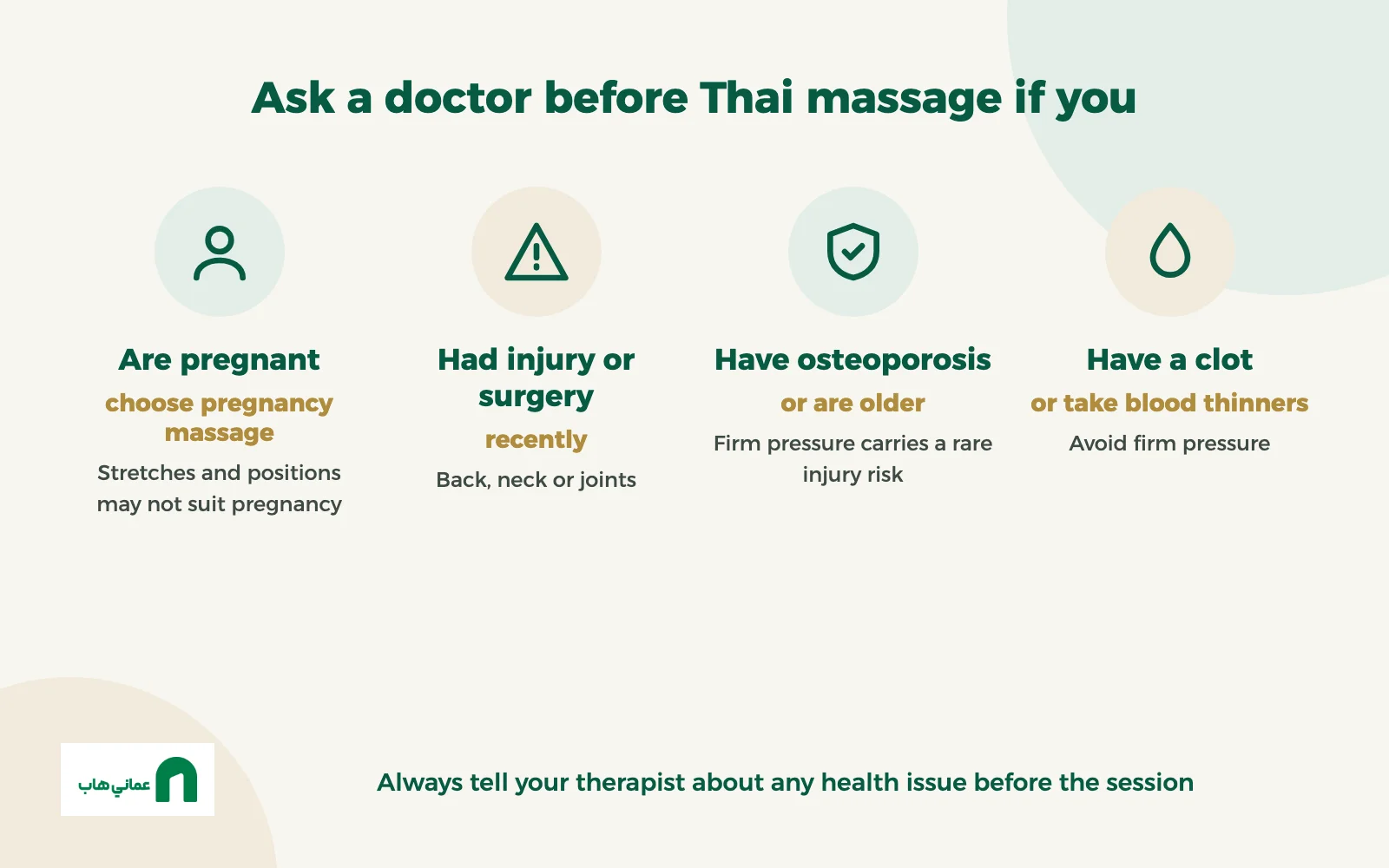
NCCIH says the risk of harm from massage appears to be low, but there have been rare reports of serious side effects such as a blood clot, nerve injury or bone fracture, some involving vigorous styles or people at higher risk of injury, such as older adults. Because Thai massage involves pressure and stretching, ask your doctor before booking in these situations:
- Pregnancy: Cleveland Clinic advises light pressure and side-lying positions for pregnancy massage, after your pregnancy provider agrees. Many Thai massage stretches and positions are not suitable in pregnancy; choose a pregnancy massage instead.
- A recent back, neck or joint injury, or recent surgery.
- Osteoporosis or older age.
- Blood clots or blood thinners.
- Uncontrolled high blood pressure or heart disease.
- Fever, a skin infection or an open wound.
How to choose a Thai massage centre in Muscat
Services vary between centres, and you may see several options carrying the name “Thai” on a menu, so read the description and ask before booking:
- Traditional Thai massage: on a mat, clothed and without oil, with pressure and stretching as described above.
- Thai massage with herbal compresses: warmed cloth balls filled with herbs are pressed onto the body, a practice UNESCO mentions as part of Nuad Thai.
- Thai-style foot massage: a shorter session focused on the feet and lower legs.
- Sessions combining Thai and oil: some centres offer a mix of stretching and oil massage on a table; this is not the traditional style, but it is an option if you want both.
If you see a package combining massage with a Moroccan bath or steam, ask how long the massage itself lasts within the package and the order of services, because heat before stretching feels pleasant for some people and tiring for others.
Before booking, compare the centres listed on the Thai massage in Muscat page by area and opening hours, then ask directly:
- Are your therapists trained in traditional Thai massage?
- Is the session on a floor mat or a table, and do you provide clothes?
- How long is the actual massage, and does it include herbal compresses or a bath beforehand?
- Can I choose a male or female therapist? Do you serve women, men or both, and at what times?
- What is your cancellation and rescheduling policy?
This page lists no prices because each centre sets its own. You can also browse massage centres in Muscat of all types, or spa and body care in Muscat.
Frequently asked questions
Is oil used in Thai massage?
Usually not. Traditional Thai massage is done while you wear comfortable clothes, without oil, although some centres offer versions that combine it with oil; ask when booking.
How long is a Thai massage session?
Commonly 60 to 90 minutes, and some centres offer shorter or longer sessions.
Does Thai massage hurt?
It should not. It includes pressure and stretches that can be strong, so tell the therapist if it goes beyond what is comfortable.
What is the difference between Thai and Swedish massage?
Thai is on a mat, clothed and without oil, using pressure and stretching; Swedish is on a table with oil, using gentle gliding strokes for relaxation.
Is Thai massage suitable during pregnancy?
Usually not, because some positions and stretches may not suit pregnancy. A pregnancy massage with light pressure, after your provider agrees, is a better choice.
Does Thai massage help back pain?
A 2015 review found lower chronic pain after Thai massage in six studies, but the evidence is still limited. Ongoing pain needs a medical check first.
Does OmaniHub recommend a specific centre?
No. OmaniHub is a directory for comparing providers; it does not provide the service or rank any centre as the best.
Sources and review
- UNESCO: Nuad Thai, traditional Thai massage (Intangible Cultural Heritage, 2019)
- Keeratitanont et al. (2015): The efficacy of traditional Thai massage for chronic pain, a systematic review
- NCCIH: Massage therapy, what you need to know
- Cleveland Clinic: Types of massage therapy
- Cleveland Clinic: Prenatal massage and what to avoid
Sources reviewed on 21 November 2026. Information is general and does not predict any individual case.