

PRP side effects: what to expect and who should avoid it
Common PRP side effects for skin and hair and how long they last, less common risks, who should avoid PRP, and tips before and after your session.
Short answer: PRP is prepared from your own blood, so side effects are usually mild and temporary: redness, swelling, pain or bruising at the injection sites that settle within days. The less common risk is infection if sterile technique is not followed. PRP is not suitable for some people, such as those with platelet disorders, anaemia, active infection or certain cancers.
Note: This guide is for general information and consultation preparation, not a diagnosis or treatment advice. OmaniHub is a directory for exploring providers; it does not provide treatment or decide whether a medical procedure suits you.
Many people ask about PRP side effects before booking, especially because it involves a blood draw and repeated injections into the face or scalp. PRP is usually considered low risk, but low risk does not mean no risk, nor that it suits or works for everyone.
This guide explains how PRP is prepared, common side effects and how long they last, less common risks, who should avoid PRP, how to prepare, and when to contact your doctor.
Quick links
- How is PRP prepared?
- Common side effects and how long they last
- Less common risks
- Who should avoid PRP?
- How to prepare for your session
- Aftercare
- When to contact your doctor
How is PRP prepared?
A small amount of your blood is drawn and spun in a centrifuge that separates platelet-rich plasma from the rest of the blood. The plasma is then injected into the skin or scalp.
Because it comes from your own body, the risk of allergy or rejection is very low. But the procedure still involves a blood draw and multiple injections, each with possible effects. Preparation methods and platelet concentrations also vary between clinics, which can affect results.
Common side effects and how long they last
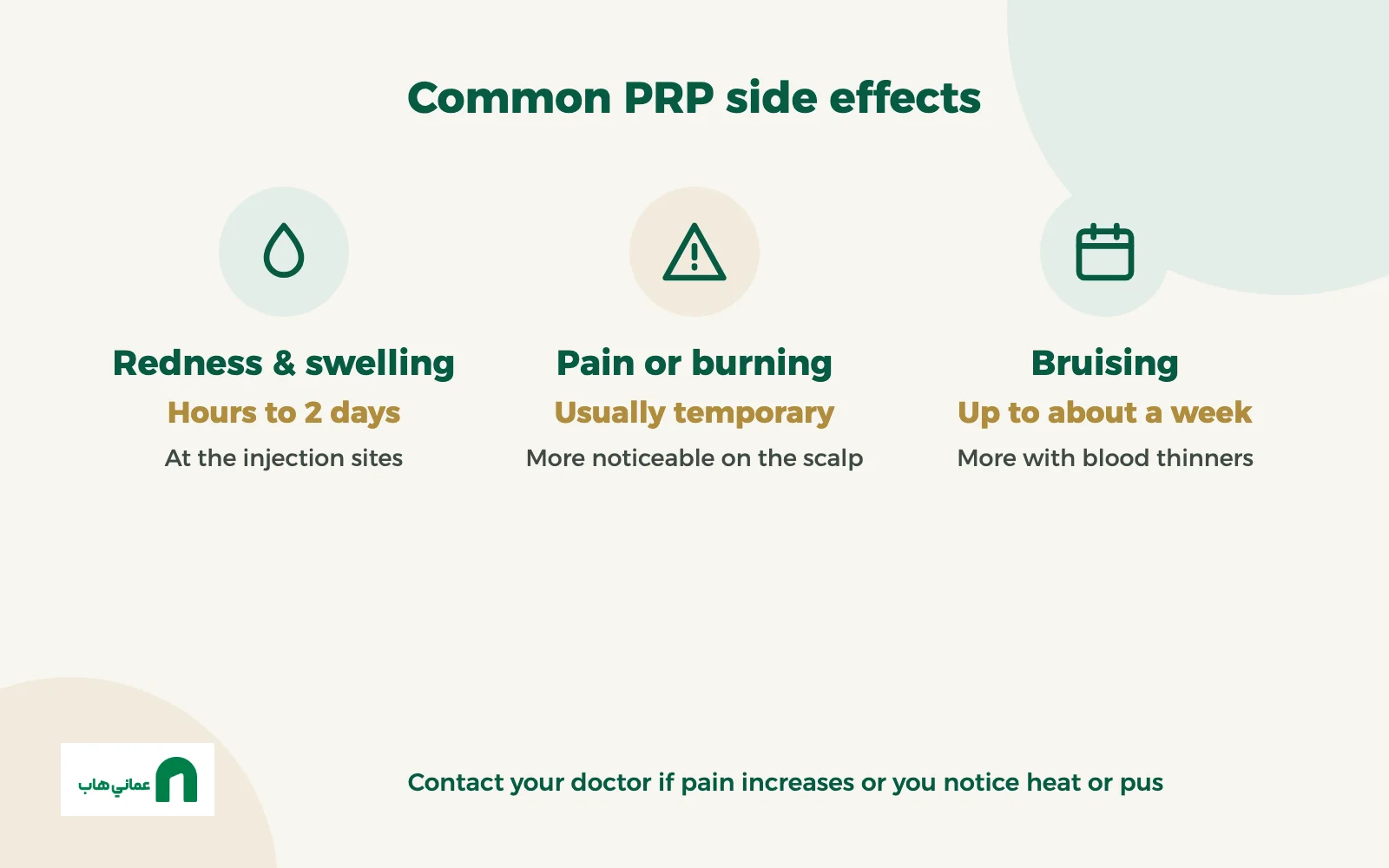
- Mild redness and swelling at the injection sites.
- Pain, burning or tenderness, usually more noticeable on the scalp.
- Small blood spots or bruising.
- A mild headache in some people after scalp injections.
- Slight dizziness during the blood draw in some people.
Most of these settle within hours to a few days. Many people return to normal activities the same day, though you may prefer to avoid events on the first day after facial injections.
Less common risks
The Hospital for Special Surgery (HSS) notes that PRP side effects are very limited because it is made from your own blood, with a remote risk of infection as with any injection. Less common risks also include:
- Infection: mostly linked to poor sterile technique, so sterile single-use equipment matters.
- Bleeding or more visible bruising: especially if you take medicines that affect clotting.
- Reaction to local anaesthetic if one is used.
- Less benefit than expected: not a health harm, but important to know, as response varies between people.
Who should avoid PRP?
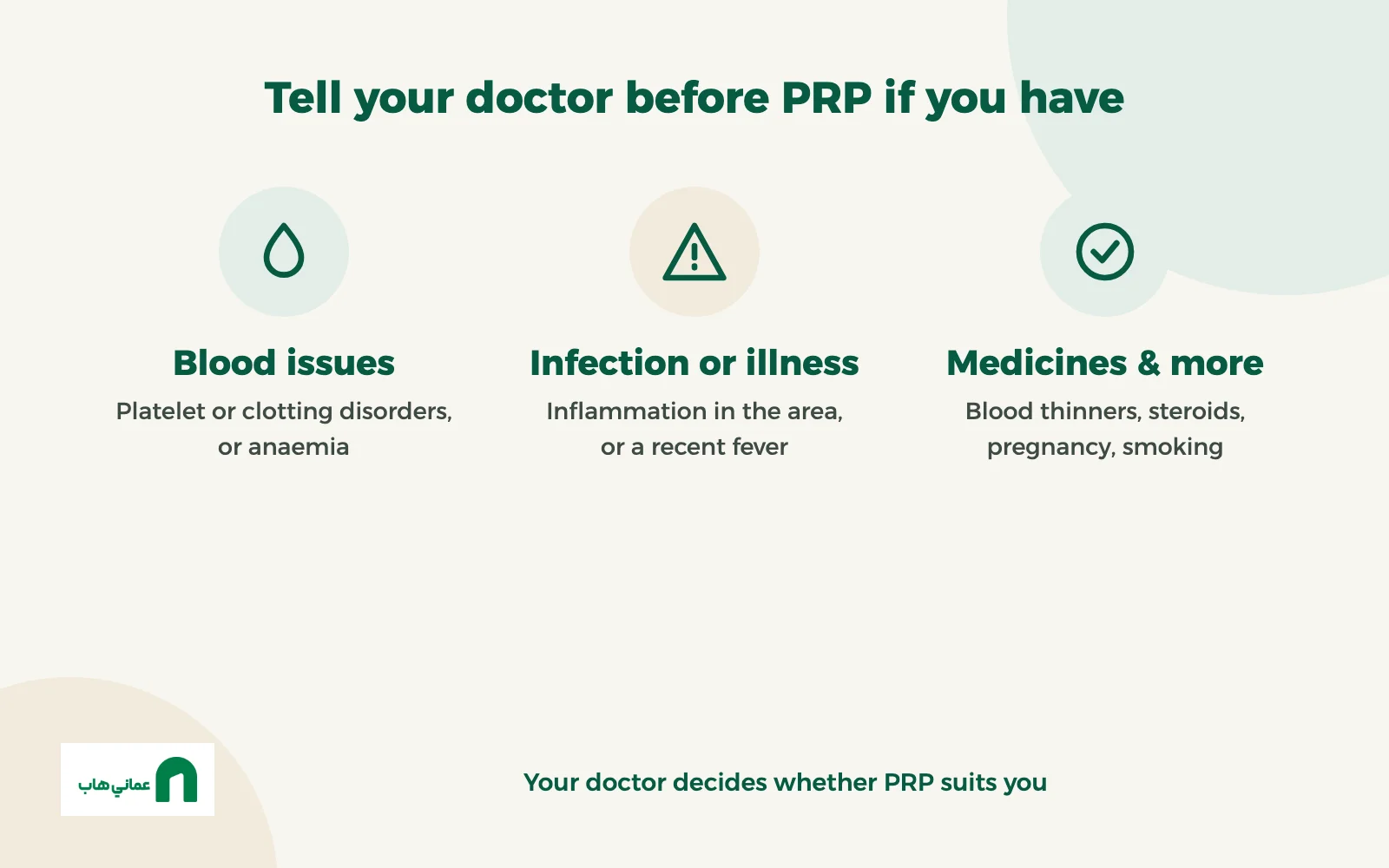
A 2022 scientific review of PRP for hair regrowth lists several relative contraindications. Tell your doctor if any apply to you:
- Platelet or clotting disorders, or a low platelet count.
- Anaemia.
- Active infection or inflammation in the area, or a recent fever or illness.
- Certain cancers, especially blood and bone cancers.
- Recent use of anti-inflammatory painkillers (NSAIDs such as ibuprofen) or steroids.
- Smoking.
- Pregnancy and breastfeeding: not well studied, and treatment is usually postponed.
This list does not replace an assessment. Tell your doctor your full health history and all medicines and supplements, and never stop a prescribed medicine without asking the doctor who prescribed it.
How to prepare for your session
- Ask which medicines to avoid before the session, and for how long.
- Drink water and eat beforehand to reduce dizziness during the blood draw.
- Wash your hair or skin as the clinic advises, and avoid harsh products beforehand.
- Tell the clinic if you feel unwell or have a fever on the day.
Aftercare
- Avoid touching or rubbing the area, and wearing makeup for as long as your doctor advises.
- Your doctor may ask you to delay washing your hair or intense exercise for some hours.
- Use sunscreen after facial treatment.
- Do not take anti-inflammatory painkillers without asking your doctor, as they may affect how platelets work.
When to contact your doctor
Contact the clinic if pain increases after day two instead of easing, or you notice spreading redness, heat, pus or fever. Seek urgent care for signs of a severe allergic reaction, such as difficulty breathing or rapid facial swelling.
To learn how PRP works, how many sessions you may need and to compare clinics in Oman, see the PRP and mesotherapy page, and for the many causes of hair loss see hair loss treatment.
Related pages: PRP and mesotherapy in Muscat, Hair loss treatment in Muscat.
Frequently asked questions
Do PRP injections hurt?
Many people feel stinging or mild burning, more on the scalp. Clinics may use numbing cream or cooling.
How long does swelling last after PRP?
Usually hours to a day or two; bruising can last up to about a week.
Can PRP cause hair loss?
This is not known as a common effect, but results vary, and hair loss may not improve if its cause does not respond to PRP. Diagnosis comes first.
Is PRP safe in pregnancy?
It has not been well studied in pregnancy or breastfeeding, and treatment is usually postponed.
Can I be allergic to PRP?
Allergy to the plasma itself is very rare since it is your own blood, but a reaction to local anaesthetic can occur.
What if I see no results?
Response varies between people. Agree a clear plan and a review point with your doctor before committing to many sessions.
Does OmaniHub recommend a clinic?
No. OmaniHub is a directory for comparing providers; it does not provide treatment or rank any clinic as the best.
Sources and review
- Platelet-Rich Plasma and Its Use in Hair Regrowth: A Review (Drug Design, Development and Therapy, 2022)
- Hospital for Special Surgery: PRP injections, side effects and risks
- Oman MOH: private health establishments
Sources reviewed on 15 November 2026. Information is general and does not predict any individual case.