
omani hub logo
Home
Search

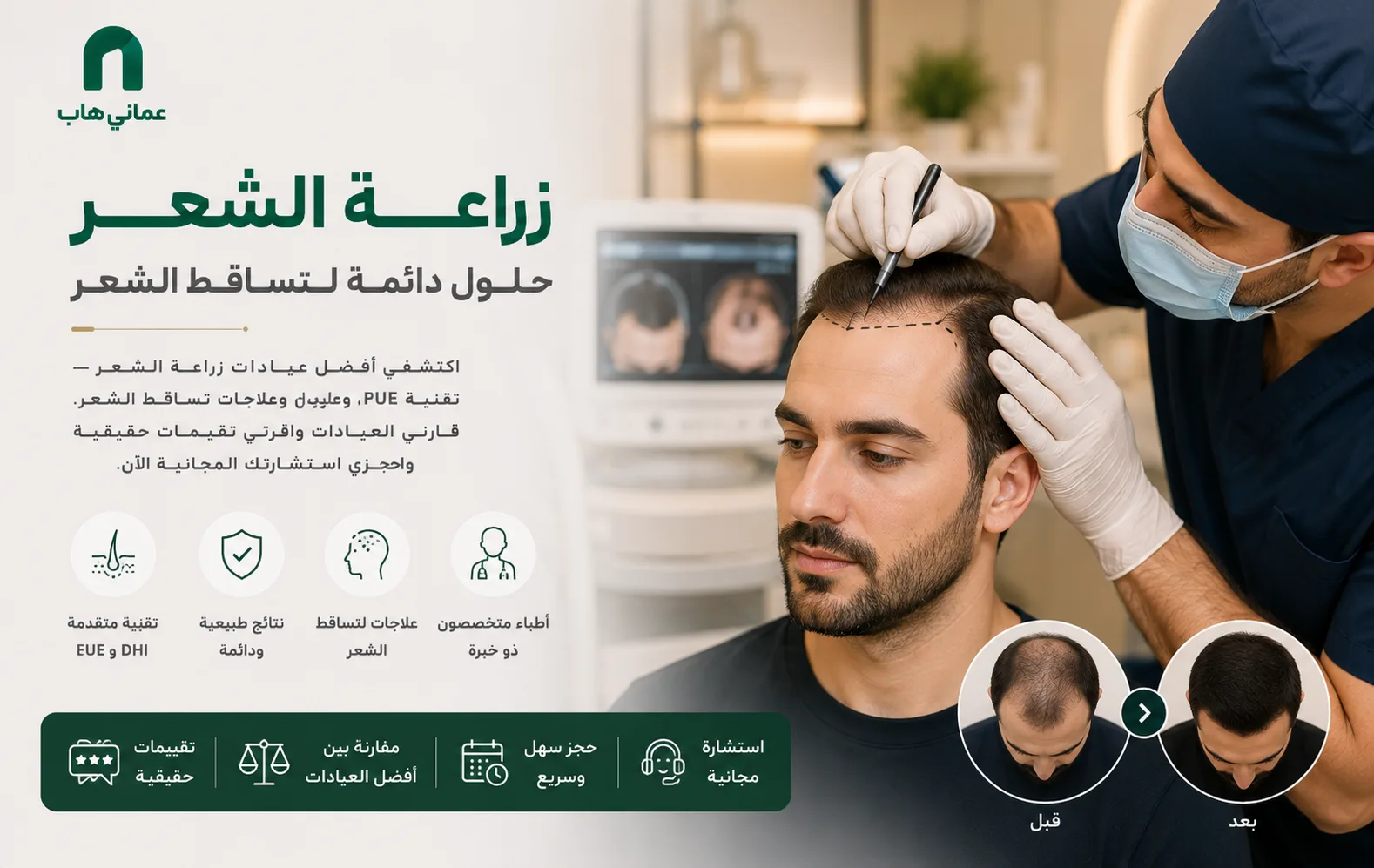
Hair transplant in Muscat

Considering a hair transplant in Muscat? This page lists clinics, plus a guide to common techniques, who is a candidate, recovery stages, when results appear and what to ask before booking.
Hair Transplant
Rating
5
Activity Center
2
City Coverage
1
Filters
Filters
Verified Only
Total results:٢ Companies
Sort by:
mhskincenter | مركز أم أتش لليزر والعناية بالبشرة

mhskincenter | مركز أم أتش لليزر والعناية بالبشرة

Oman - Muscat
Book Now+
100.00
H/M Clinic

H/M Clinic

Oman - Muscat
Book Now+
0.00

What is a hair transplant?

A surgical procedure that moves hair follicles from a donor area, usually the back of the head, to thinning or bald areas. It is usually done under local anaesthesia and can take several hours depending on the number of grafts.

Common techniques

  • FUE: follicles are extracted one by one, leaving small dot scars.
  • FUT: a strip of skin is taken from the donor area and divided, leaving a linear scar.
  • DHI: a type of FUE in which grafts are implanted with a special tool.

The right technique is chosen by the doctor based on your case and donor density.

Who is a candidate?

It usually suits people with relatively stable hair loss and enough donor hair. The cause of hair loss should be diagnosed first; some types respond to medicine or PRP, and a transplant may not be suitable.

Recovery and when results show

  • Scabs and redness in the first days, following washing and sleeping instructions.
  • Temporary shedding of transplanted hair in the first weeks is common.
  • New growth usually starts after a few months, with the full result often visible after around a year.

Risks

Swelling, mild pain, rare infection, scarring and sometimes lower density than expected. Ask the doctor about risks and the follow-up plan.

How to choose a hair transplant clinic in Muscat

  • Make sure a licensed doctor assesses you and oversees the procedure, and ask who performs each step.
  • Ask about the proposed number of grafts and the technique.
  • Ask about follow-up and what happens if the result is not as expected.
  • Ask for the total price in writing.
  • Read reviews and compare listed clinics.

Related services: hair loss treatment, PRP and mesotherapy, cosmetic clinics.

Frequently asked questions about hair transplants in Muscat

Does a hair transplant hurt?

It is usually done under local anaesthesia, so you feel the numbing injections and then limited discomfort. Mild pain for a few days afterwards is possible.

Is a hair transplant permanent?

Grafts from the donor area usually last a long time, but surrounding native hair may continue to thin, so the doctor may recommend supporting treatment.

When can I go back to work?

Many people return to light work within days, depending on the technique and the doctor’s advice.

Which is the best hair transplant clinic in Muscat?

No single clinic is best for everyone. What matters is a licensed, experienced practitioner, a clear assessment of your case and a written price. Compare the listed clinics and reviews; OmaniHub does not label any clinic “the best”.

How much does a hair transplant cost in Muscat?

Each clinic sets its own prices, which vary with the number of grafts, technique, team experience and follow-up. Confirm the final price with the clinic after the consultation.

FUE extracts hair follicles using a precise circular punch tool, then creates tiny channels in the recipient area where the follicles are implanted. DHI uses a Choi Implanter Pen, which extracts and implants the follicle at the same time without pre-opening channels. This reduces the time follicles stay outside the body and may improve survival rates. DHI generally provides higher density and more natural hair angles, making it ideal for the frontal hairline. FUE is better suited for larger coverage areas and is usually more cost-effective. The specialist determines the most suitable method based on your condition.
Yes, hair transplantation is also suitable for women. However, female hair loss tends to be more complex and may result from hormonal, nutritional, genetic, or postpartum factors. Unlike men, women rarely experience complete baldness but often suffer from diffuse thinning across the scalp. This can make donor area selection more challenging and may reduce eligibility for traditional transplantation in some cases. A specialist consultation is essential to determine whether hair transplant or alternative treatments such as PRP or minoxidil are more appropriate.
The first week is crucial for recovery. Avoid touching the transplanted area Sleep with your head elevated to reduce swelling Avoid direct sun, heat, and steam Follow your doctor’s washing instructions carefully Avoid intense exercise for 2 weeks No swimming for 1 month No cutting or dyeing hair for 3 months Smoking reduces blood circulation and can negatively affect healing. It is recommended to stop smoking at least one week before and two weeks after the procedure.
The procedure is performed under local anesthesia, so there is no pain during the session. You may only feel slight discomfort during the anesthesia injections, which quickly subsides. The procedure usually takes 4–8 hours depending on the number of grafts. After the session, mild discomfort or swelling may occur for a few days and is easily managed with simple pain relievers. Most patients return to their normal activities within 3–5 days.
Transplanted hair is taken from genetically resistant donor areas, so it typically retains its resistance to hair loss after being moved. This makes the results long-lasting and often permanent. However, existing non-transplanted hair may continue to thin over time, especially in cases of active genetic hair loss. For this reason, doctors may recommend supportive treatments like minoxidil to preserve existing hair. Proper planning ensures future hair loss patterns are considered during the transplant design.
The number of grafts depends on the size of the bald area, desired density, donor hair quality, age, and hair loss pattern. General estimates: Receding hairline: 1,000–2,000 grafts Partial baldness: 2,000–3,500 grafts Moderate hair loss: 3,000–5,000 grafts Advanced hair loss: 5,000+ grafts (may require multiple sessions) A precise evaluation by a specialist is required to determine the exact number after examining both donor and recipient areas.
WhatsAppWhatsApp