

Botox vs. Fillers in Muscat: Differences and Questions to Ask
Understand the general difference between Botox and dermal fillers, key risks and practical questions to ask before a consultation in Muscat.
Botulinum toxin products and dermal fillers are different kinds of injectable treatment. The FDA describes botulinum toxin products as acting on muscle contraction, while fillers add volume in specified uses. That distinction does not tell you which, if either, is appropriate for your concern. Start with a qualified clinical consultation rather than choosing an injection from a photograph or a discounted package.
Disclosure: This guide is for education and consultation preparation, not diagnosis or medical advice. OmaniHub is a marketplace directory for browsing service categories; it does not perform injections or determine medical suitability.
This guide helps customers in Oman prepare for that consultation and understand a proposed quote. It does not recommend a product, dose, injection site or personal treatment plan. Your useful next step is to describe what bothers you, discuss alternatives and limits, and understand the professional's assessment before giving consent. Choosing not to proceed is also a decision you can discuss.
Quick navigation
- Explain the concern before naming the injection
- Understand the distinction without self-prescribing
- Ask who assesses you and who injects
- Bring an accurate history to the consultation
- Discuss limitations and alternatives openly
- Understand risk without relying on reassuring slogans
- Make the quote understandable before paying
- Separate consent from marketing permission
- Leave with a clear next step and follow-up route
Explain the concern before naming the injection
Describe the change you have noticed and what you hope to understand. For example, you may be unsure whether a line relates to movement or whether a concern is about shape or volume. You do not need to classify it yourself. Tell the clinician what you see and what outcome you consider acceptable, then ask how the assessment connects that concern to any proposed option.
Avoid using a filtered image as a fixed instruction. You can bring a reference to explain preferences, but ask which parts are realistic for your own features and circumstances. A picture does not establish the products used, the person's history or the time between treatment and photography. The conversation should separate a preference from a promise of an identical appearance.
Use the Botox and filler marketplace to identify the relevant service category, then confirm the professional and consultation arrangements directly. A listing supports discovery; it does not establish your suitability or endorse a particular injection plan. Ask for current information about the practitioner rather than relying on a promotional description alone.
Understand the distinction without self-prescribing
The table summarises the basic distinction using the FDA's consumer explanation. It is not a list of locally approved indications or a recommendation for your face. Foreign regulatory information does not determine permission in Oman, and the actual product, proposed use and local professional requirements need appropriate verification.
| Type | General distinction | Question for the clinician | Source |
|---|---|---|---|
| Botulinum toxin product | Acts on muscle contraction; not a filler | Why is this approach being considered for my concern? | FDA consumer explanation |
| Dermal filler | Adds volume for product-specific uses | Which product and use are proposed, and why? | FDA consumer explanation |
Do not turn this distinction into a rule that every line needs toxin or every shape concern needs filler. Ask the clinician to explain the assessment, alternatives and the reasons an option may not be recommended. A short comparison can help you ask a question, but it cannot account for anatomy, health history or the details of a proposed procedure.
The cosmetic clinic parent category provides a broader starting point for clinical cosmetic services. The beauty and wellness category shows the wider service structure. These links help you navigate by service; use appropriate professional and regulatory channels to verify who may perform the specific work being discussed.
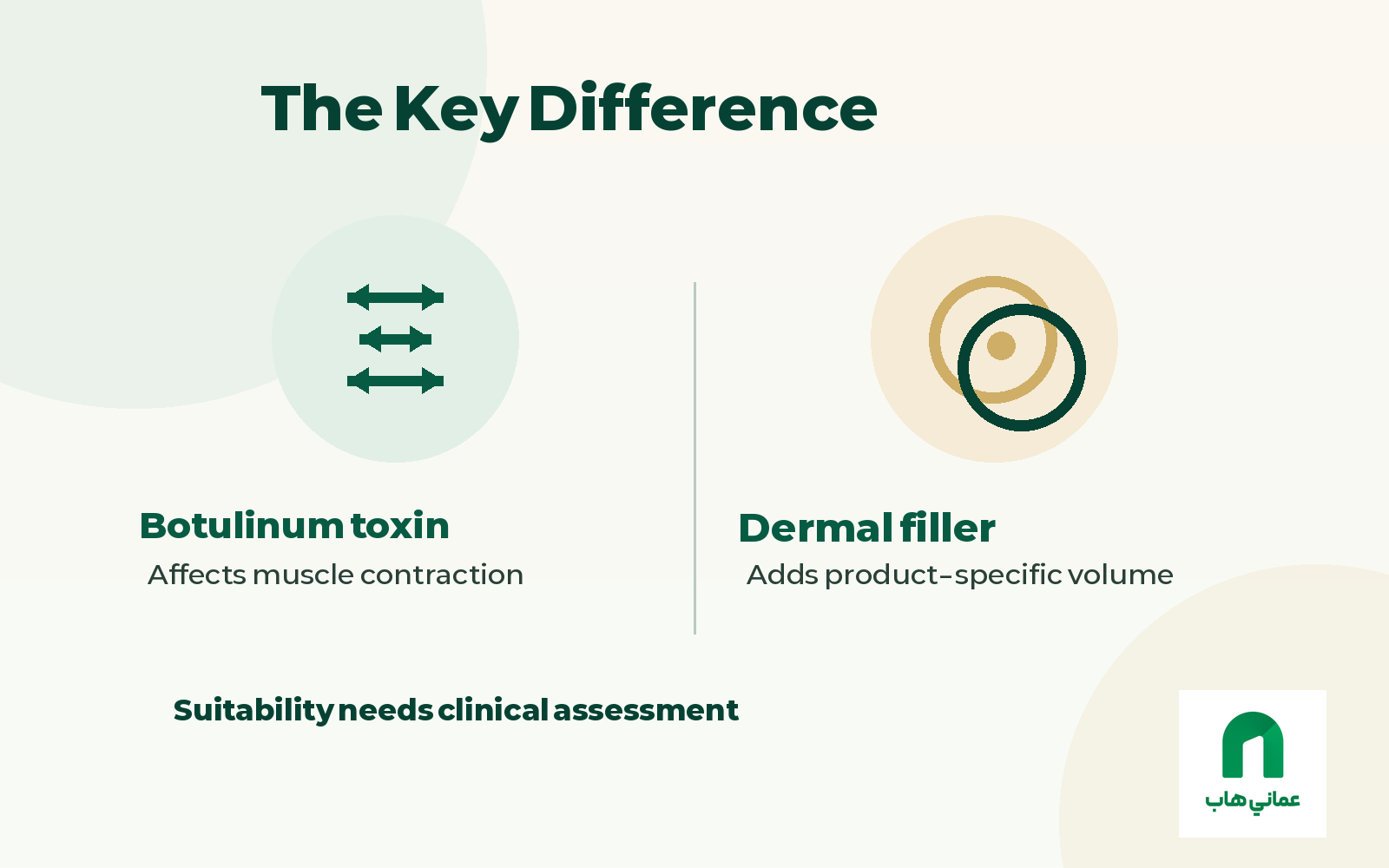 General educational diagram; it does not determine personal suitability.
Ask who assesses you and who injects
Get the relevant professional identity and ask who will perform the assessment, the injection and any follow-up. If different people have different roles, request an explanation of how they communicate and who answers clinical questions. A familiar product name is not a substitute for knowing who is responsible for your care.
In Oman, the Ministry of Health Directorate General of Private Health Establishments points users to directories of licensed private establishments and health professionals. Use official channels to check the facility and practitioner details, and ask the relevant authority when information is missing or unclear.
AAD's preparation guidance encourages questions about experience, expected results, personal risks and cost. Ask the clinician to connect their experience to the proposed work rather than accepting a general statement about many years in beauty. You can ask for the explanation in language you understand and request time to consider the information before choosing a procedure.
If the person answering messages cannot address a clinical question, ask how to arrange a conversation with the appropriate professional. That can be a reasonable next step. What should not remain unclear at the point of consent is who will treat you and who will manage a concern afterwards. Keep those contact arrangements with your consultation notes.
Bring an accurate history to the consultation
Prepare a private list of relevant medical conditions, medicines, supplements and previous cosmetic procedures. AAD's preparation pages emphasise sharing this information with the treating dermatologist. Ask what records would help, especially if you have had earlier injections and do not know the product. State when information is unavailable rather than guessing a brand or amount.
Mention previous reactions and the outcome you are worried about. Also discuss pregnancy, breastfeeding or other circumstances the clinician asks about. Do not interpret this article as a clearance checklist: a list of questions cannot decide suitability. The clinician needs to review your information and explain the implications for the actual proposed option.
Do not stop prescribed medicines to make an appointment easier without appropriate medical advice. If you receive preparation instructions, ask who should confirm a change to ongoing care. Keep booking messages separate from clinical instructions so that a scheduling conversation does not accidentally become a medical decision made without the relevant professional.
Discuss limitations and alternatives openly
Ask what the proposed procedure is intended to address and what it is not expected to change. A realistic explanation should leave room for variation and uncertainty. You should understand whether the clinician is discussing a temporary effect, a review point or a longer-term plan without assuming a fixed duration applies to every product and every person.
Ask about reasonable alternatives, including waiting or not having a procedure. If several treatments are proposed together, request a separate explanation of each and why the combination is being considered. A package title does not establish that every part is necessary. Understand the assessment and the costs before accepting a bundle of different interventions.
If you have an important event or upcoming travel, state the dates. Ask how timing affects the decision for your circumstances. Avoid choosing based on a generic promise of instant results or no interruption to your routine. The purpose of a consultation is to discuss your situation, not to fit everyone into the advertisement's schedule.
Understand risk without relying on reassuring slogans
FDA information makes clear that fillers carry risks; accidental injection into a blood vessel can cause serious harm. Its guidance advises immediate medical attention for warning signs such as vision changes or unusual pain during or shortly after treatment. Discuss the risks and emergency arrangements with your clinician; a claim of guaranteed safety should not replace that conversation.
Ask what complications are relevant to the proposed procedure, how you will receive instructions and what route to use if a concern arises. This guide cannot give a complete symptom assessment or personal aftercare plan. A clinical question should go to an appropriate professional, and urgent concerns require prompt healthcare rather than waiting for a social-media reply.
Ask about the exact product and patient information. A sealed package or a known name does not remove the need to understand the proposed use and risks. Do not buy injectable products for self-administration or choose an unassessed procedure because it appears simple in a video. Your decision should be based on a professional explanation and verified arrangements.
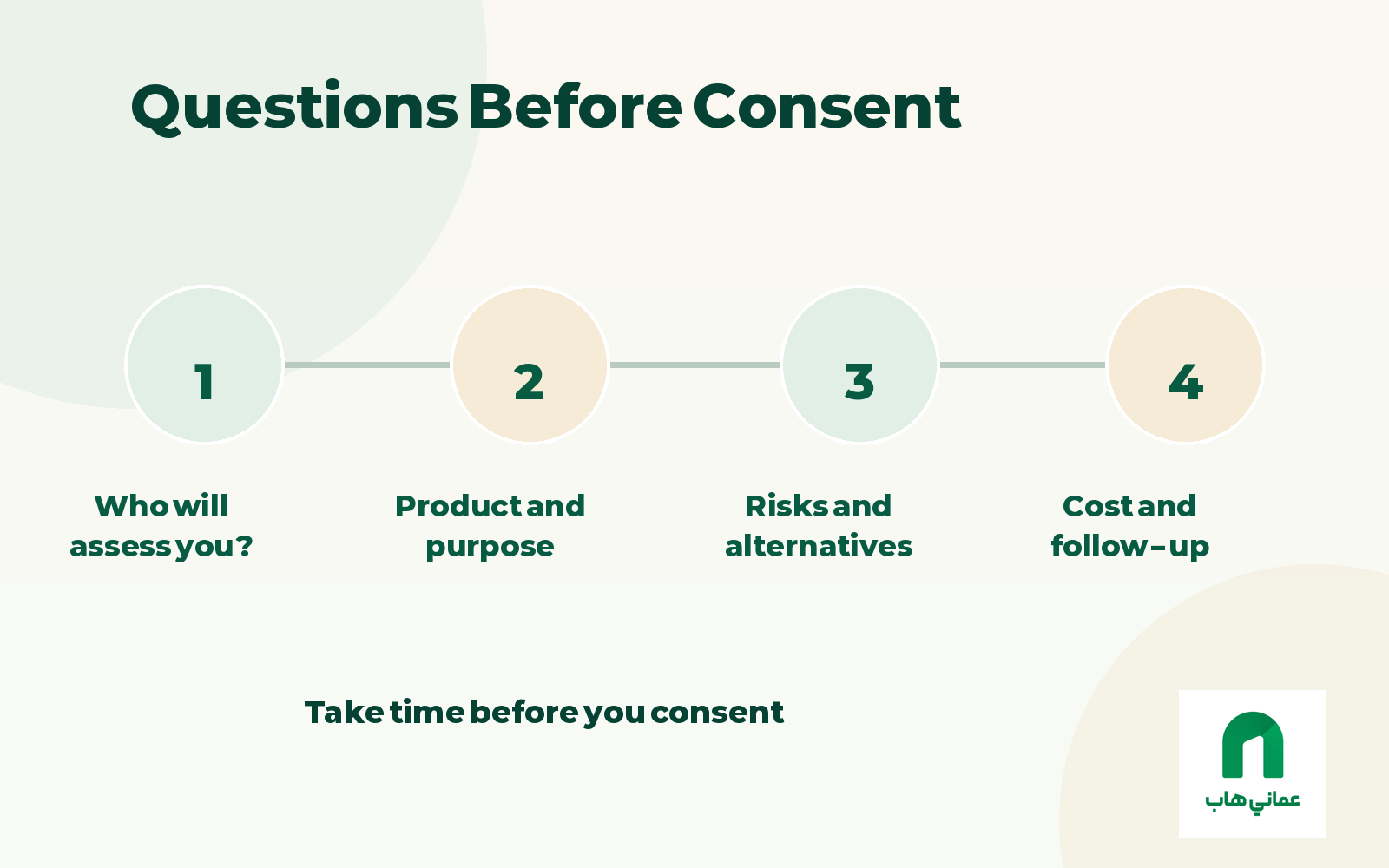 A consultation preparation aid, not medical advice.
Make the quote understandable before paying
Request the proposed scope and total after the assessment. Ask whether consultation, the procedure, review and any additional work are included. If pricing is described by units or syringes, ask the clinician to explain the quote in relation to the assessed plan. Do not decide your own amount from a price menu or compare numbers that refer to different products and scopes.
Identify which charges are definite and which depend on a later decision. If the plan changes, request a revised explanation and price before proceeding. A lower headline price is not necessarily a lower total, and a bigger package is not automatically a better choice. Compare the actual proposal and follow-up terms rather than treating quantity as value.
Confirm deposits, cancellation, rescheduling and what happens if the consultation concludes that the advertised procedure should not be performed. Keep the terms in writing. You should know whether you are paying for assessment or reserving a procedure, because these are different commitments and may have different conditions.
Separate consent from marketing permission
Ask to read the consent information and discuss anything unclear. Check that it describes the actual proposal rather than a general package you are no longer considering. If the product, area or scope changes, ask for the change to be explained before you agree. Being present at the appointment does not make unanswered questions less important.
Clarify how photographs and records are used. Clinical documentation and promotional use serve different purposes, so ask about permissions rather than assuming they are interchangeable. You can express privacy preferences before the visit and ask how sensitive information is handled. Keep the communication channel appropriate to the clinical nature of the appointment.
Leave with a clear next step and follow-up route
Before making a final decision, summarise the concern, assessment, proposed option, limitations, costs and questions still open. Ask when a result would be reviewed and which contact route applies afterwards. Obtain instructions for the actual procedure if you proceed, rather than relying on a generic leaflet from a different offer or another customer's experience.
If important information is missing, request another discussion or postpone. A consultation can be worthwhile even when it ends without treatment. Understanding the distinction between toxin and filler is only the beginning; the decision becomes useful when it includes your assessment, a clearly defined proposal, informed consent and a practical plan for questions and follow-up.
For a practical final check, ask the clinician to summarise the proposal in plain language and identify anything still undecided. Keep that summary with the quote and contact information. If the explanation differs from what you expected from the advertisement, discuss the difference before consenting. A clear account of the actual plan is more useful than repeating a treatment label you do not fully understand.
Frequently asked questions
Are Botox and fillers the same procedure?
No. Botulinum toxin affects muscle contraction, while fillers add volume for product-specific uses. That distinction does not establish which suits you; discuss the concern in a qualified consultation.
Can I choose the procedure from a photograph?
A reference can explain a preference but cannot establish suitability or an identical result. Ask what is realistic and what the proposed plan does not address.
What should I bring to the consultation?
Prepare relevant conditions, medicines, supplements, previous procedures and reactions. If a previous product is unknown, say that the information is unavailable rather than guessing.
How should I compare two quotes?
Compare assessed product and scope, consultation, review, extras and deposit terms. Do not select your own quantity or compare units and syringes belonging to different plans.
Can I decide not to have injections after consultation?
Clarify assessment fees and booking terms beforehand. A consultation may lead to more questions, waiting or no procedure; understand those options before paying.
What if I have a concern afterwards?
Use professional instructions and appropriate healthcare channels. FDA guidance advises immediate medical attention for vision changes or unusual pain during or shortly after filler treatment; do not wait for a social-media response.
Does OmaniHub provide treatment or recommend a specific option?
No. OmaniHub is a marketplace directory for browsing service categories; it does not perform injections or determine whether a treatment suits you. Verify relevant credentials through official channels and get clinical advice from a qualified practitioner.
Sources and review
- FDA: distinction between botulinum toxin products and dermal fillers
- FDA: dermal filler risks and urgent warnings
- AAD: preparing for a filler consultation
- AAD: preparing for a botulinum toxin consultation
- Oman Ministry of Health: private establishments and licensed professionals
Sources checked 10 October 2026. The table is a question-planning aid, not price data or treatment advice.